
News
Tax Talk Newsletter Spring 2026


Your best customer is worth protecting
Most businesses spend a lot of time trying to find new customers. But the easiest sales often come from people who already know and trust you.
Research consistently shows that retaining an existing customer is generally far less expensive than acquiring a new one. Existing customers are more likely to buy again, spend more over time, and recommend your business to others.
One local tradesperson recently introduced a simple follow-up system. Every completed job received a thank-you email, followed three months later by a friendly check-in asking whether everything was still working well.
The result wasn’t just positive feedback. Previous customers began booking additional work and referring neighbours and family members.
Customer loyalty doesn’t require expensive marketing campaigns. Often it’s built through small, consistent actions: responding promptly, communicating clearly, delivering on promises, and staying in touch after the sale.
Think about your own customer database. When was the last time you contacted your existing clients without trying to sell something?
Sharing helpful tips, industry updates or seasonal reminders keeps your business front of mind.
Your competitors are always looking for your customers, so a little attention today can prevent them looking elsewhere tomorrow
Dealing with tough times
If your business is going through a difficult time, things can be overwhelming. By focusing on one area at a time, you’ll be able to see what steps you can take to improve things – whether the issue is finances, stress, staffing or something else.
Review your numbers to deal with financial challenges
If you’re wondering “what next” or “what now” for your business, looking at your current financial figures can help you plan next steps.
Knowing your numbers lets you compare different options. One way is to forecast where your costs and income will be in the future – for example, in six months or a year. A forecast is your educated guess based on what you know now.
There’s always a cost to waiting
Every business owner has a list of jobs they’ll “get around to one day.” Updating prices. Chasing old debtors. Reviewing subscriptions. Looking at insurance. Checking whether staff are using the latest software properly.
The problem is, small costs rarely stay small.
One café owner recently reviewed their monthly expenses after noticing profits weren’t matching sales. Within an hour they found three software subscriptions they no longer used, an internet plan that was far more expensive than market rates, and merchant service fees that hadn’t been negotiated in years.
Their review found more than $4000 a year in savings – without selling one extra coffee.
Many business owners focus on increasing revenue while overlooking expenses that quietly grow over time. Inflation, automatic renewals and changing supplier pricing can all erode profits.
A simple annual “business health check” can uncover surprising opportunities. Review recurring expenses, compare suppliers, check margins on your best-selling products, and make sure your pricing still reflects today’s costs – which seem to rise daily! Even small improvements compound over time.
Growing a business isn’t always about working harder. Sometimes it’s about stopping money from quietly leaking away.
Second-hand goods
Inland Revenue has more clearly defined the words “second-hand” and “paid”.
“Second-hand” is fairly obvious, but you should note that for tax purposes the goods must have been bought in New Zealand.
Payment is of particular significance because it doesn’t matter if a person making the claim is on a payments or invoice basis for GST, they have to have actually paid for the goods to claim the whole amount of GST.
If you buy an asset and put down a deposit, the deposit is payment, but the balance has not yet been paid so you can’t claim second-hand goods GST input tax on this amount.
But if you pay for the goods with arranged finance, you have then made payment and can claim the GST. Your loan repayments don’t contain GST.
Sometimes, the deposit will be made in one GST period, but the finance won’t be completed until the next GST period. If this happens, you have to delay your claim for GST on the amount financed until the second GST period.
Special rules apply where second-hand goods are bought from an associated person – such as your company buying a car owned by you.
There are also special rules about leasing.
When you click the wrong link
It happens in a flash. You look up a trusted brand online, say, searching for “Air New Zealand” to book a flight.
You click the top result, go through the booking process, and realise only later that you didn’t buy from the airline at all. Instead, you booked through a third-party reseller.
Secondary booking sites pay heavily to appear at the top of Google or Bing. They aren’t scams, but they can come with hidden booking fees, rigid cancellation policies, and often with a much higher price.
Fortunately, protecting yourself from this digital detour takes only a few simple habits.
- Search engines always put advertisements at the top of the page. Look closely at the small text just above or beside the headline. If it says “Sponsored” or “Ad”, it means a company has paid to be there. Skip past these paid ads until you find the official site you’re looking for.
- Before you enter any credit card detail, look at the address bar at the very top of your browser screen. Make sure the domain name matches the company exactly – for example, www.airnewzealand.co.nz and not a reseller like www.edreams.com. Look for the small padlock icon or the https:// prefix, which guarantees a secure connection. But remember, scammers can secure their sites too, so looking closely at the text itself is your best safeguard.
If you have a handful of websites you use frequently for banking, travel, or insurance, don’t rely on a search engine to get you there every time. Navigate to the official site once, then bookmark it in your browser. Next time, a single click will take you safely to the genuine webpage, bypassing the search engine minefield.
The golden rule
Slow down at the final checkout. If the branding looks slightly off, or if unexpected booking fees suddenly appear, pause and check that address bar. A five-second double-check can save you hours of customer-service headaches trying to unravel unexpected fees.
Food manufacturing visits finding safety gaps in machinery and hazardous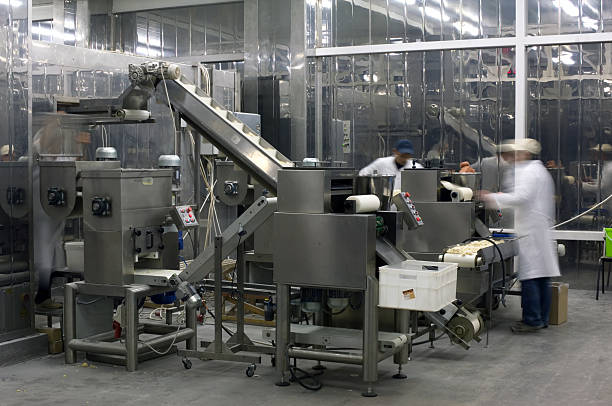
WorkSafe inspectors have visited more than 300 food manufacturing businesses since July as part of our focus on the sector this quarter to support safer work.
“At this midway point, the common issues requiring improvements are machinery safety and hazardous substances management,” says WorkSafe’s project lead Loren Molloy.
Machinery continues to be a main cause of harm in manufacturing, leading to about 200 injuries that result in more than a week off work each year.
Many serious injuries involve workers being caught in moving parts such as rollers, belts, or blades, often because machines were not adequately guarded or locked out.
A Christchurch commercial bakery was sentenced earlier this year after a worker’s hand was pulled into machine rollers, resulting in life-changing injuries.
Three critical safety failures that led to worker losing fingers
“WorkSafe expects businesses to identify their hazards and put effective controls in place,” says Loren Molloy. “For machinery, that means proper guarding, isolating machines before cleaning or maintenance, and making sure workers are trained to work safely.”
Hazardous substances recordkeeping and safe storage are also frequently being found to need improvement at assessment visits, with too many businesses not even having a hazardous substances inventory.
On a more positive note, inspectors have noted good worker engagement, participation and representation at many food manufacturing workplaces.
“It’s encouraging to see many food manufacturers actively involving their workers in health and safety, ensuring they can suggest improvements and raise concerns,” says Loren Molloy.
Our proactive food manufacturing assessments will continue until the end of September. This engagement with businesses and workers is key to WorkSafe helping them to meet their responsibilities to ensure work is healthy and safe.
Manufacturing has more injuries than any other sector, and food production is one of three manufacturing subsectors, alongside wood production and metal fabrication, where WorkSafe concentrates its effort.
Unguarded farm machinery can change lives in seconds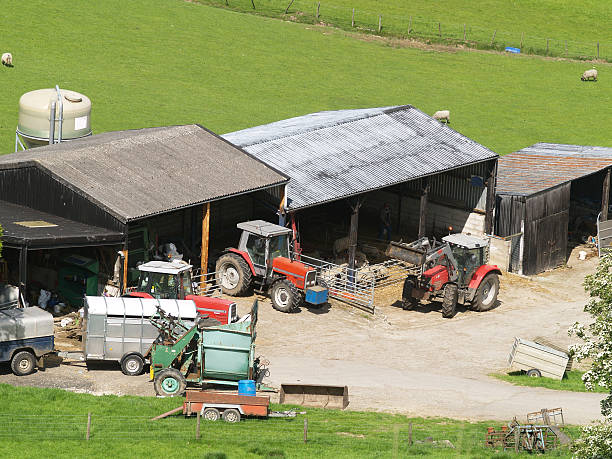
WorkSafe is reminding farmers to make sure all machinery guards are in place and regularly checked after a farm worker suffered life-changing injuries when he became entangled in an unguarded power take-off (PTO) shaft on a Wairarapa dairy farm.
The worker lost an arm and suffered multiple serious injuries after his clothing was caught in the unguarded PTO shaft while operating a tractor connected to a feed mixer in January 2025.
The farming company pleaded guilty to a charge under the Health and Safety at Work Act 2015 and was convicted and fined an end total of $60,000 and ordered to pay reparation of approximately $96,000.
PTO shafts are one of the most hazardous parts of farm machinery. They rotate at high speed and when unguarded, can catch loose clothing in an instant, causing serious injuries or death.
WorkSafe’s Central Region Manager, Nigel Formosa, says the incident highlights why guarding machinery must be treated as a critical safety control.
“Farmers know PTOs are dangerous, yet we continue to see workers seriously injured by machinery that isn’t properly guarded.
“Guards are the last line of defense between a worker and a rotating shaft. If a guard is missing or damaged, the consequences can be devastating.”
The farm’s risk register recognised the high risk of entanglement with machinery and its safety management system required PTO shafts to always be guarded – no exceptions.
WorkSafe’s investigation found that the tractor and feed mixer were being operated without any guarding in place on the PTO shaft. Compliance with an adequate pre-start check and maintenance process was not effectively monitored. That process should have included checking guards were present and addressing any wear or damage by replacing damaged guards
“This incident shows that having rules on paper is not enough. Farmers need systems that ensure guards are actually present, in good condition, and checked before machinery is used,” says Nigel Formosa.
Regular inspections are particularly important because PTO guards can become damaged through normal farm operations and may need replacing.
WorkSafe is encouraging farmers to:
- check PTO shafts and other moving machinery parts are fully guarded
- inspect guards regularly for wear, damage, or missing components
- repair or replace damaged guards immediately
- include guarding checks in documented pre-start inspections
- ensure workers are trained to identify and report damaged or missing guards
- keep well clear of PTO shafts and disengage machinery before approaching it.
Agriculture remains one of New Zealand’s highest-risk industries, and machinery-related incidents continue to cause serious harm.
“No job on the farm is so urgent that it justifies taking risks around moving machinery. A few minutes spent checking guards can prevent injuries that affect workers and their families for the rest of their lives,” says Nigel Formosa.
Health and safety
Some fringe benefits supplied for health and safety reasons are not subject to Fringe Benefit Tax (FBT).
To qualify for this exemption, the benefit must meet the following four requirements:
- It must be for an employee: If you operate through an ordinary Limited Liability Company, you are considered an employee if you work in the business (even if you are a shareholder-employee), so this can apply to you too. Note on LTCs: If your company is a Look-Through Company (LTC) and you own shares, you are treated as a “working owner”. Working owners are completely outside the FBT regime, so FBT does not apply to you. However, if you work in the LTC but do not own shares personally (for example, if a family trust owns them), you are treated as a standard employee, meaning FBT rules and this health and safety exemption do apply to you.
- It relates directly to health and safety: The benefit cannot just be a general perk.
- It must manage a specific workplace risk: The benefit must be provided to help the employer meet their obligations under the Health and Safety at Work Act 2015. General health and well-being initiatives typically do not qualify. For example, providing free annual flu injections manages the risk of a workplace outbreak and is exempt. Providing a gym membership is a general benefit, so it remains subject to FBT.
- It is not an explicitly restricted benefit: The exemption generally does not apply to subsidised travel, accommodation, or standard clothing, unless they are specifically required to manage a distinct workplace health and safety hazard (such as specialized protective gear).
Some examples to help you work out if the health and safety exemption applies:
Applies
- ergonomic desk and chair for employee who works from home to manage the risk of injury
- counselling services – high-stress workplace affecting mental health
- Covid vaccinations
- eye and hearing tests – risks relating to workplace
- first aid training to manage workplace injury risks
- sunscreen for employees who work outside.
Does not apply
- corporate running or biking event to promote general health and well-being
- prescription glasses and hearing aids – because of personal benefit.
- health insurance premium to manage general risks to an employee’s health.
The business that runs without you
Could your business operate for two weeks without you? For many owners, the honest answer is no.
That’s understandable. Most small businesses are built around the owner’s knowledge, relationships and decision-making.
However, this dependence creates risk. Illness, family emergencies, much-needed holidays time, or unexpected opportunities can quickly expose weaknesses.
Businesses become more valuable – and less stressful to own – when systems replace memory.
If you want to step back from the daily tasks that your business depends on, start by documenting those tasks. Create simple checklists for opening and closing processes, invoicing, customer enquiries and ordering stock. Store important passwords securely and ensure key staff understand the essential work.
Cross-training employees also reduces reliance on any one individual.
These improvements don’t just prepare for emergencies. They save time, improve consistency and make hiring new staff much easier.
If you ever plan to sell your business, documented systems can also increase its value. Buyers are purchasing a business that works, not just a job that depends on the owner.
To be clear, building systems isn’t about making yourself unnecessary. It’s about giving yourself better options.
Important: This is not advice. Clients should not act solely on the basis of the material contained in the Tax Talk Newsletter. Items herein are general comments only and do not constitute nor convey advice per se. Changes in legislation may occur quickly. We therefore recommend that our formal advice be sought before acting in any of the areas. The Tax Talk Newsletter is issued as a helpful guide to our clients and for their private information. Therefore it should be regarded as confidential and should not be made available to any person without our prior approval.